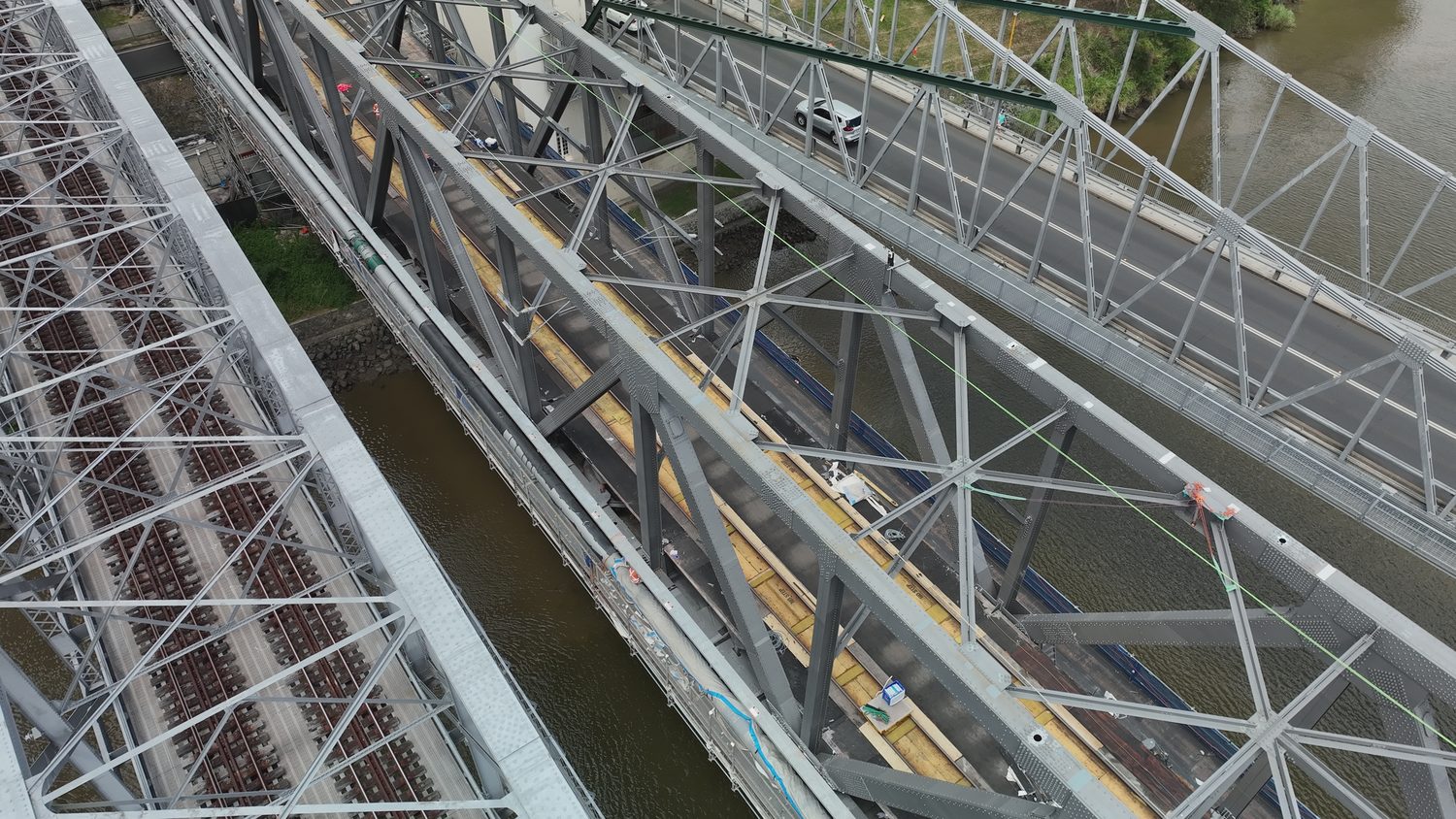
Close visual inspection, without the ropes
Imagery at sub-millimetre ground sample distance, captured from safe standoff, covering every face of the asset with no rope access crews, no scaffold and no EWP hire.
From full span to fastener, one capture
A close visual inspection (CVI) by drone captures every face of a structure at sub-millimetre ground sample distance from a safe standoff, with no rope access, scaffold or EWP. It covers bridges, towers, dams and facades across Brisbane and SEQ. You receive inspection photos and video of the defects rather than a 3D model; an inspector or third-party witness reviews them live or from the footage afterwards, and a PDF report is available on request. The same flight that documents the structure end to end resolves individual rivet heads and coating failure. Wide for context, tight for condition.
CONTEXT FRAME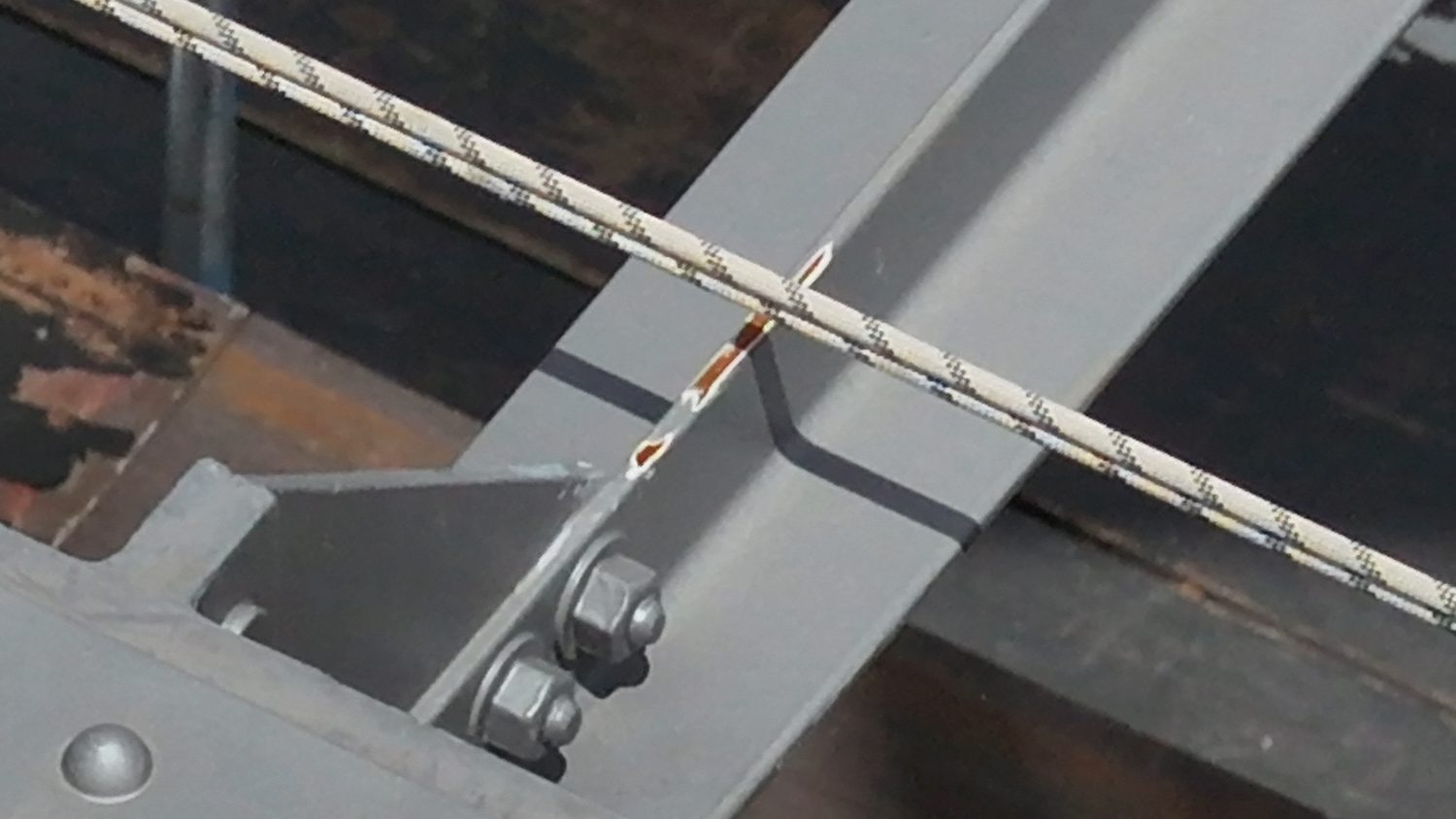 DETAIL — SAME PASS
What the drone replaces
A conventional close inspection means access: rope crews, scaffold, EWP hire, traffic control, permits, and people suspended next to the thing being inspected. Most of that cost buys access, not information.
Flown from standoff, the same information arrives without the exposure: full coverage of soffits, bearings and upper members that ground-based passes sample at best. A visual inspection builds no 3D model; you get the photos and footage of the defects, usually reviewed by an inspector or third-party witness live or afterwards. It's the more cost-effective option. When you need each finding pinned to a measurable 3D model, step up to AI defect detection.
| Replaces | ROPE ACCESS · SCAFFOLD · EWP HIRE |
|---|---|
| Coverage | EVERY FACE, INCLUDING SOFFITS + UPPER MEMBERS |
| Exposure | ZERO WORKING-AT-HEIGHT |
| Deliverable | DEFECT PHOTOS + VIDEO · PDF ON REQUEST |
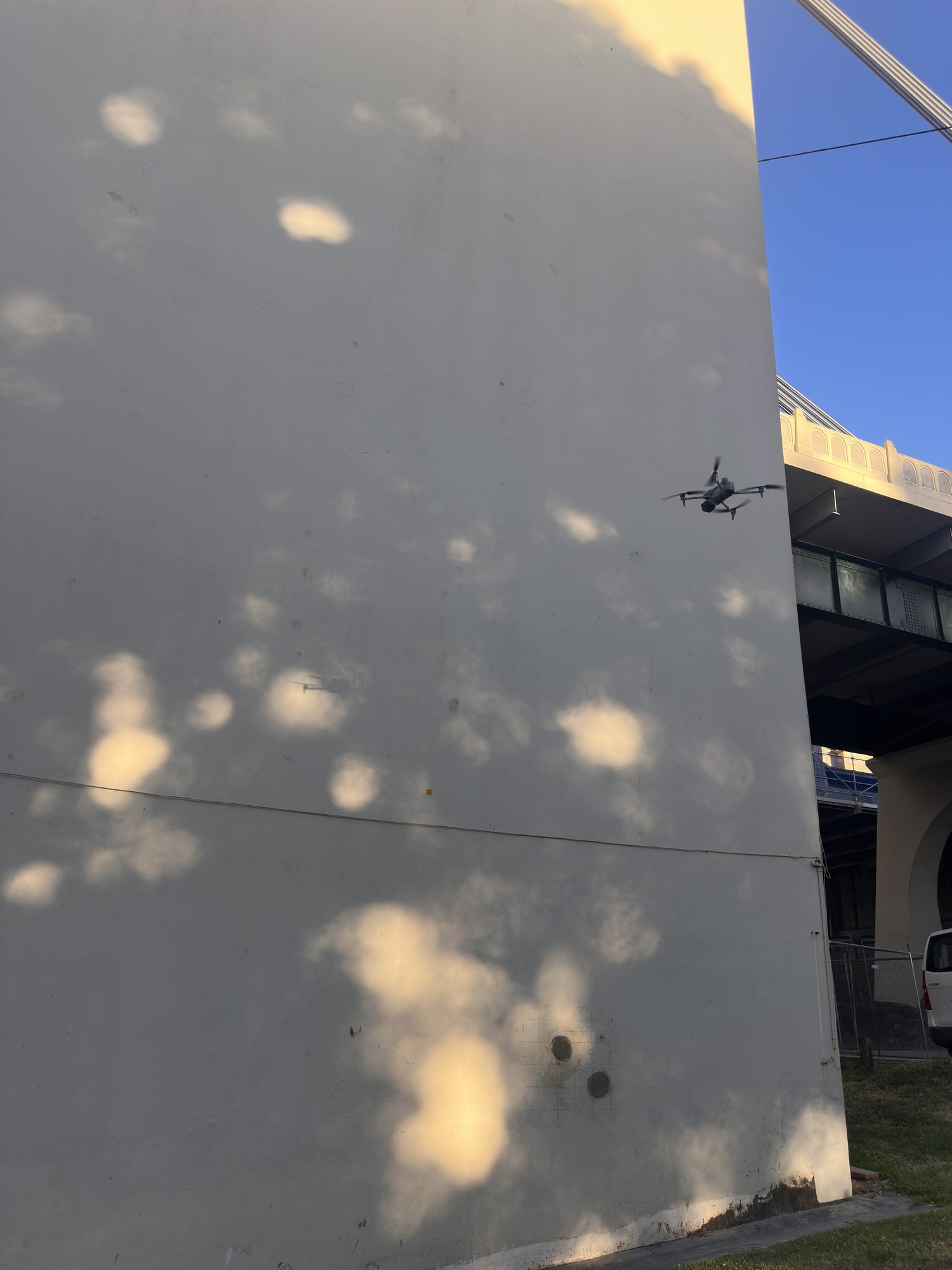 CAPTURE — STANDOFF POSITION
Where this earns its keep
River bridges, telecommunications towers, dam faces and spillways, wharves, facades, roofs and plant structures: anywhere condition matters and access is the expensive part.
Operations are planned around your site constraints and the relevant approvals, with SWMS and insurances supplied before anyone mobilises.
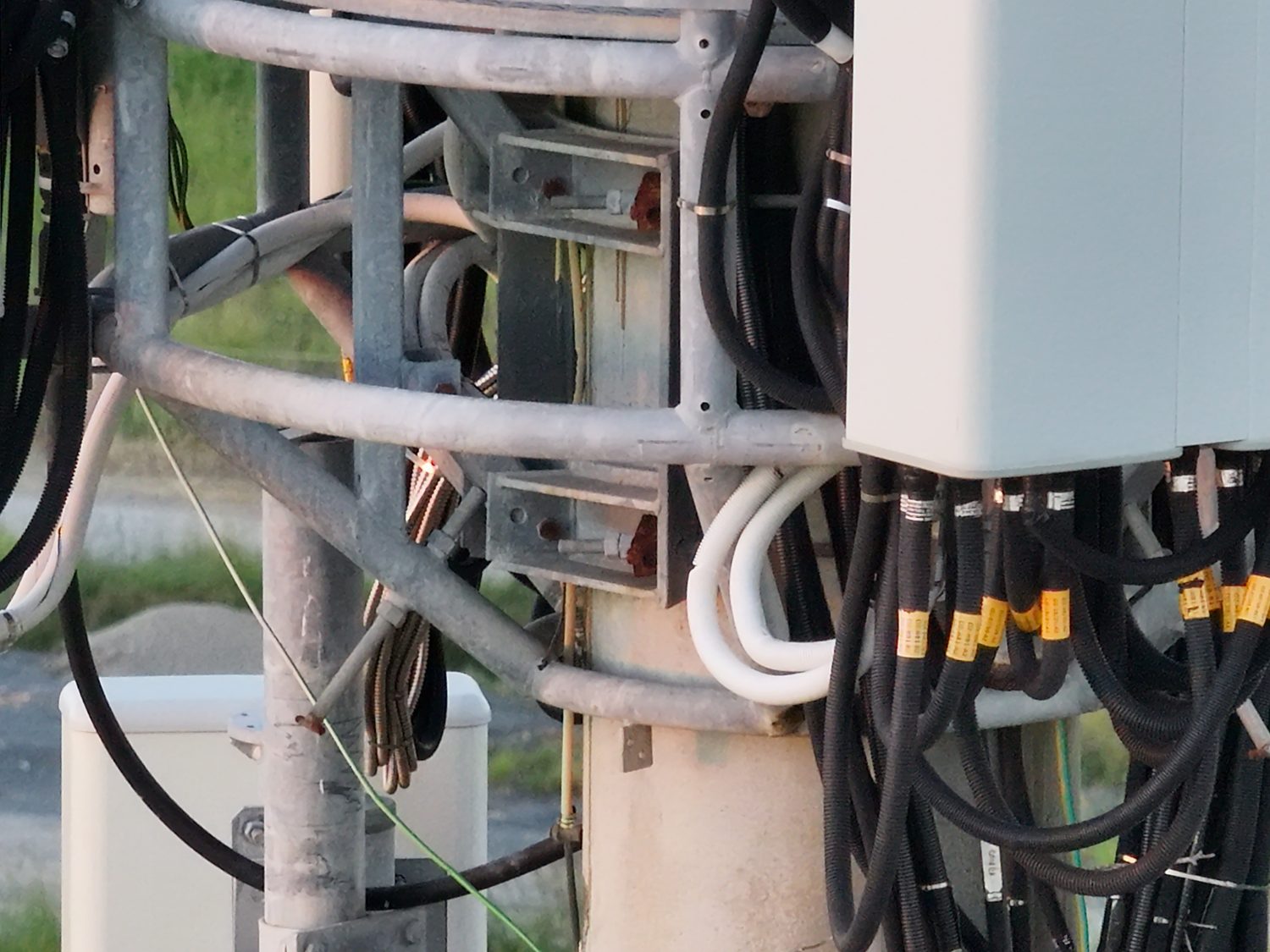 ASSET — COMMS TOWER
Flown on Brisbane’s hardest-access jobs
This is the method behind two published Brisbane bridge programs. The Story Bridge under-deck netting verification confirmed the netting intact in a live video review with the contractor, with the bridge’s own inspection platforms out of action. The Indooroopilly Rail Bridge inspection ran in parallel with repaint crews inside a single weekend track possession, relaying findings to remediation supervisors in real time. Same workflow, scoped to your structure.
Straight answers, before you ask
Q/01What resolution does the imagery achieve?
Capture is planned at sub-millimetre ground sample distance to resolve surface detail at the asset face: fine cracking, coating breakdown, fastener condition. You receive both the context frames and the detail crops, referenced so your engineer knows exactly where each image sits on the structure.
Q/02Which assets can you inspect?
Bridges, towers, dams and spillways, wharves, facades, roofs and industrial plant. If the surface is visible, it can be captured; where geometry is tight, standoff and lens selection are designed around it in the flight plan.
Q/03What about airspace and site approvals?
Hover operates under CASA ReOC #9398 and arranges the airspace approvals a site requires, including controlled airspace work. SWMS, insurances and site documentation are supplied ahead of mobilisation as standard.
Q/04What do we receive at the end?
A referenced set of inspection photos and video covering every face, with defects flagged for engineering review. No 3D model is built; a visual inspection is the faster, more cost-effective option. Findings can be reviewed by your inspector or a third-party witness live during the flight or from the footage afterwards, and a written PDF report is available on request where the scope calls for one. Where you need each defect pinned to a measurable 3D model, that's the AI defect detection service.
Q/05How much does a drone inspection cost?
Simple single-asset visual inspections in Australia typically start in the several-hundred-dollar range, while large or complex structures with full defect reporting run into the low thousands. See the cost guide; Hover returns a written, fixed quote within one business day.
Q/06What is a close visual inspection (CVI)?
A close visual inspection is a detailed, near-range assessment of a structure’s surface condition, traditionally done from ropes, platforms or scaffold. Flown by drone, the same inspection captures every face at sub-millimetre ground sample distance from a safe standoff, with the inspector reviewing live or from the referenced record afterwards. The structure stays in service and nobody works at height.
Q/07Drone inspection, rope access or EWP: which should we use?
For the visual layers of an inspection program, the drone is usually the fastest and lowest-cost option, and the safest, because nobody leaves the ground. Rope access and EWPs earn their cost the moment the job needs hands on the structure: testing, sampling, repairs. The efficient pattern is to fly first, then mobilise access crews only where a finding demands hands-on work. The full costed comparison is in the drone vs rope access vs EWP guide.
Scope this for your site
Send the asset and the deliverable you need. A scoped method and quote come back within one business day.
HARRY BILLING — CHIEF REMOTE PILOT
0411 445 458
harry@hoverai.au
CASA ReOC #9398 · $28M PUBLIC LIABILITY